Night on Bald Mountain—by Mussorgsky or Rimsky-Korsakov?
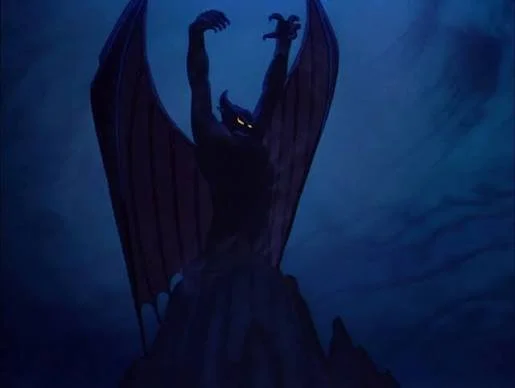
The standard version we know of Mussorgsky’s A Night on Bald Mountain is not Mussorsky’s original version or his own orchestration. The score reads “Completed and revised” by Rimsky-Korsakov. Even that description doesn’t do justice to the extent Rimsky-Korsakov reworked and essentially re-composed this version that we all know and love today.
For Rimsky-Korsakov, it was a labor of love. He wrote: “It was a difficult task, of which the satisfactory solution baffled me for two years, though in the other works of Mussorgsky I had got on with comparative ease. I had been unable to get at either form, modulation, or orchestration, and the piece lay inert until the following year.”
HIs problem was that all the versions Mussorgsky composed were episodic and fragmentary. Mussorgsky first conceived the tone poem for piano and orchestra, in the spirit of Liszt’s Todentanz, then later for orchestra alone. His teacher Balakirev criticized it severely, and it wasn’t performed until after it was finally published in 1968. Since then it has had many performances and it’s really interesting to hear:
A Night on Bald Mountain—Original Version by Mussorgsky
The opening is more terrifying than Rimsky-Korsakov’s version! Timpani double the ostinato in the low strings, creating a powerful, blurry rumble. It’s an effect that still sounds quite modern. And in fact, Mussorsky’s original written in 1867 has several orchestra brushstrokes that augur Stravinsky’r Rite of Spring. Rimsky-Korsakov “tamed” most of those and swept them back into the late 19th century. But after the astonishing opening, while we hear all the tunes and ideas that Rimsky-Korsakov apprpriated, instead of a tight composition, we hear a highly episodic and disconnected narrative. Climaxes are missing convincing harmonic arrivals. The tone shifts from demonic music to light ballet. Connecting material is haphazard and weak. There is no coda of church bells. In short, it’s a compositional mess.
Rinsky-Korskakov never even knew this original orchestra version. He first saw Mussorgsky’s second version, transformed into part of a ballet called Mlada. That version had singing! Yet another attempt came in a dream sequence in a comic opera, Sorochintsï Fair. This version had the village church bell vanishing all the spirits. This was the version on which Rimsky-Korsakov based his piece.
What a unique example in the classical repertoire! I call it “his piece” because while every tune and idea is Mussorgsky’s, the actual composition—the progression of ideas, the harmonic structure, the psychological narrative genius, and of course the stunning orchestration—that is all Rimsky-Korsakov. Clearly a labor of love and I imagine his task was for more difficult than creating his own original composition.
I’m sure the most difficult part was creating a convincing form to dispel its episodic nature. Rimsky-Korsakov managed to fashion a sonata form using only Mussorgsky’s material. No small feat.
He cleaned up Mussorgsky’s muddiness, losing some of its raw power, but imparting a far greater palette of color and imagination, especially using string techniques like col legno (bowing with the wood of the bow) and harmonics, muted sinister brass, and some brilliant piccolo writing. As we all know, Rimsky-Korsakov was one of the great masters of orchestration.
Finally, he brought the tone poem to a surprising and stunning conclusion in the coda, not only with the church bells vanquishing the spirits, but also with beautiful harp arpeggios, a solo clarinet, and solo flute. The very end is even reminiscent of Rimsky’s Sheherazade.
So is this tone poem, one of the most well-known and loved int he orchestra repertoire, by Mussorgsky or Rimsky-Korsakov? The question is the answer!
A Night on Bald Mountain—Rimsky-Korsakov version